10 Best Pet Grooming Tools to Buy
A brush that works on one dog can be a total miss on another. That is why finding the best pet grooming tools starts with your pet’s coat, skin sensitivity, and tolerance for being handled – not just with what looks popular on the shelf.
For most pet owners, grooming is really about keeping life easier at home. Less fur on the couch, fewer tangles, cleaner paws, and a pet that feels comfortable instead of itchy or stressed. The right tools make that routine faster, gentler, and a lot less frustrating for both of you.
What makes the best pet grooming tools worth buying?
The best grooming tools do two jobs at once. They help your pet look cleaner, but they also support comfort, skin health, and easier upkeep between baths and vet visits. A good tool should feel simple to use, hold up over time, and match your pet’s actual needs.
That last part matters more than people think. A heavy-duty de-shedding tool can be great for a thick double coat, but too harsh for a short-haired pet with sensitive skin. A slicker brush can be a lifesaver for tangles, but if the pins are too stiff or the brushing session goes too long, it can quickly become unpleasant. Shop smart by focusing less on hype and more on fit.
Best pet grooming tools for everyday home use
If you want a solid at-home setup, you usually do not need a huge kit. A few well-chosen tools can cover most needs for dogs and cats.
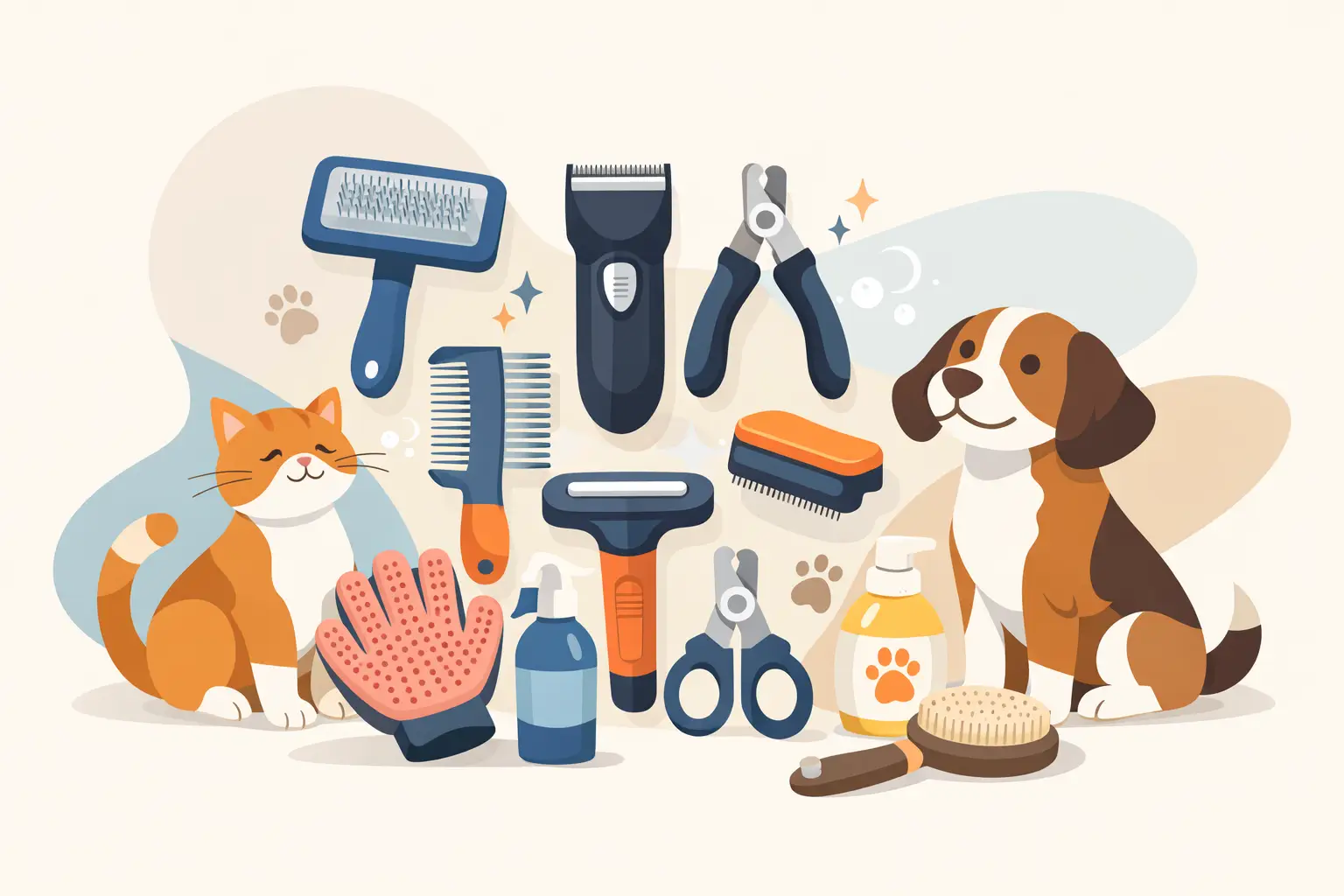
1. Slicker brush
A slicker brush is one of the most useful grooming basics, especially for medium to long coats. It helps remove loose fur, light mats, and surface debris while keeping the coat looking smoother. If your pet tangles easily, this is often the first tool people reach for.
The trade-off is pressure. Some slicker brushes have very fine metal pins that work well but can feel scratchy if used too aggressively. For nervous pets or sensitive skin, a softer version is usually the better buy.
2. De-shedding tool
For pets that seem to leave a second pet’s worth of fur around the house every week, a de-shedding tool can make a real difference. These are designed to pull out loose undercoat hair before it ends up on your floors, clothes, and furniture.
This tool works best on breeds with dense coats or seasonal shedding. It is not ideal for every coat type, and overuse can irritate the skin or thin the coat more than intended. A little goes a long way.
3. Grooming comb
A comb is not flashy, but it is one of the most practical tools you can own. It helps check for hidden tangles, works well around the face and ears, and can be more precise than a brush when you are finishing up a grooming session.
Wide-tooth combs are better for thicker coats, while finer teeth can help with detail work. If your pet gets mats behind the ears or under the legs, a comb often catches what a brush misses.
4. Nail clippers or grinder
Nail care is easy to postpone until the clicking on the floor gets impossible to ignore. Regular trims matter because overgrown nails can affect posture, comfort, and traction.
Clippers are simple and affordable, but some owners feel more confident with a grinder because it can smooth the nail gradually. The downside is noise. Some pets hate the sound or vibration, so the best pick depends on what your pet will actually tolerate.
5. Pet-safe shampoo and bath brush
Bathing goes more smoothly when the shampoo is made for pets and the brush helps work it through the coat evenly. A soft bath brush can loosen dirt and hair while giving your pet a gentle massage, which some pets enjoy more than standard scrubbing.
If your pet has dry or sensitive skin, avoid anything overly scented or harsh. Gentle formulas are usually the safer choice for regular use.
6. Grooming wipes
Not every cleanup needs a full bath. Grooming wipes are handy for muddy paws, tear stains, drool, and quick freshening up between washes. They are especially useful if you want to keep your pet clean without turning every small mess into a major task.
They are not a replacement for proper bathing, but they are a smart convenience item for busy households.
How to choose the best pet grooming tools for your pet
The quickest way to shop with confidence is to think about coat type first. Short-haired pets usually need less intense brushing but still benefit from regular loose-hair removal. Long-haired pets often need tools that handle detangling and mat prevention. Curly or dense coats may need more frequent maintenance and more patience.
Skin sensitivity is the next filter. If your pet scratches easily, has allergies, or dislikes grooming, softer tools are usually the better starting point. Comfort matters because the best tool on paper is useless if your pet refuses it after one try.
Size matters too. A large brush on a tiny cat can feel clumsy, while a small comb on a big dog can make grooming drag on forever. Choose tools that feel manageable in your hand and proportional to your pet.
Grooming mistakes that make good tools feel like bad ones
Sometimes the problem is not the tool. It is how it is used. Brushing too hard, grooming too long, or using the wrong tool on the wrong coat can all turn a helpful product into an unpleasant experience.
A common mistake is trying to force through mats with a standard brush. That usually pulls the skin and makes pets dread grooming. Another is over-bathing, which can dry out the skin and leave the coat looking dull instead of fresh. Nail trimming is another big stress point, especially when owners rush.
Short, calm sessions tend to work better than trying to do everything at once. A few minutes several times a week is often easier than a long grooming marathon.
Building a simple grooming routine that sticks
The best routine is the one you can keep up with. For many households, that means brushing a few times a week, checking nails regularly, wiping paws as needed, and bathing only when your pet truly needs it.
If your pet sheds heavily, a de-shedding session during peak shedding season can help keep fur under control. If your pet has a longer coat, daily quick checks with a comb can prevent small tangles from turning into bigger ones. The goal is not perfection. It is staying ahead of the mess and keeping your pet comfortable.
Rewards help, too. Treats, praise, and a gentle pace can make grooming feel less like a chore and more like a normal part of the day. That is especially helpful for young pets or rescues still learning to trust handling.
When affordable grooming tools are enough – and when they are not
A lot of shoppers assume expensive always means better. Sometimes it does mean stronger materials, better ergonomics, or gentler performance. But not every pet needs the premium version of everything.
For basic coat maintenance, an affordable brush, comb, and nail tool may be all you need. Where it can make sense to spend a little more is on items you use often or tools that directly affect comfort, like nail grinders with better control or brushes designed to reduce pulling.
Value is not just about the lowest price. It is about getting a tool that works well, lasts, and helps you avoid replacing it after a few frustrating uses. That practical, shop-smart mindset is exactly what many pet owners want from a one-stop store experience like Enkoco.
The best pet grooming tools are the ones you will actually use
There is no single perfect grooming kit for every dog or cat. The best pet grooming tools are the ones that fit your pet’s coat, your comfort level, and your routine at home. If a tool helps you stay consistent, keeps your pet more comfortable, and cuts down on daily cleanup, it is doing its job.
A good grooming setup should make life feel easier, not more complicated. Start with the basics, choose for your pet instead of the trend, and give yourself room to adjust as you learn what works best.








Leave a comment